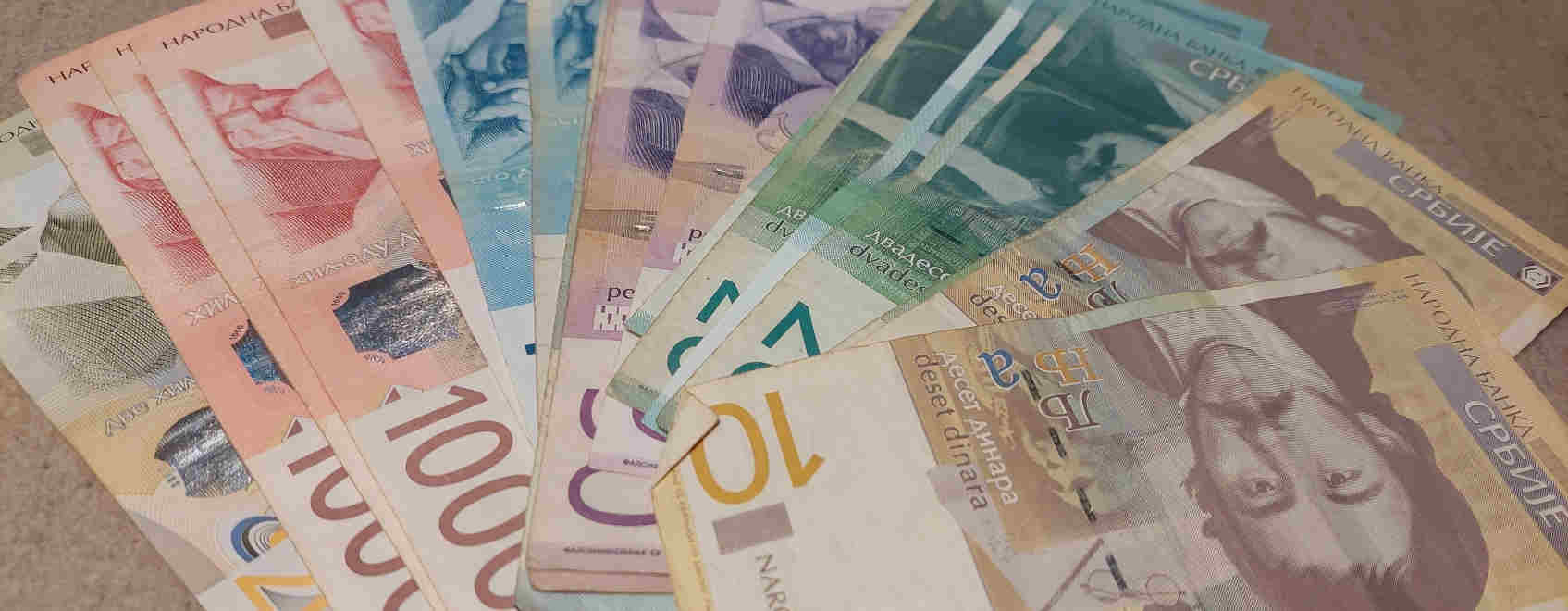
When planning a trip to Belgrade, one of the first practical questions that comes up is: Should I bring cash? If you’ve already looked into exchanging Serbian dinars (RSD) before your trip, you may have noticed that hardly any currency exchange outside of Serbia deals with dinars. That’s because the Serbian dinar is a closed currency, meaning it’s generally only available inside the country. So what does this mean for travelers? Let’s break it down.
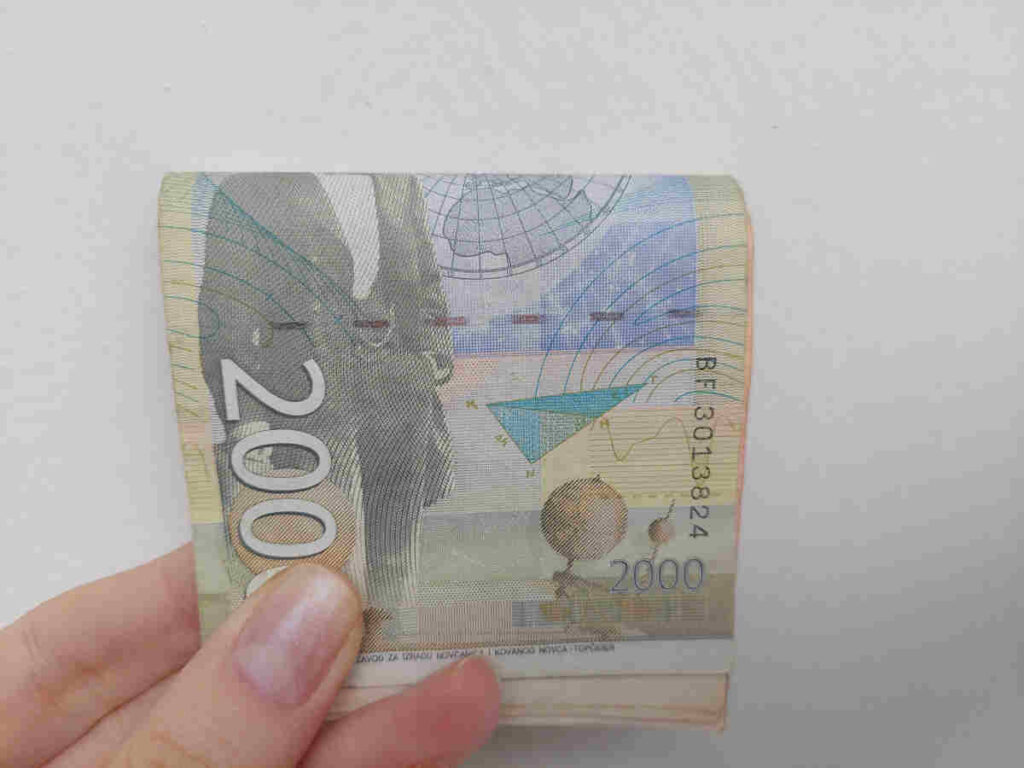
Table of Contents
Cash in Belgrade: Still Very Common
Yes — cash is widely used and accepted in Belgrade. While cards are accepted in most supermarkets, restaurants, malls, hotels, and app-based taxis, cash is still the go-to choice for many smaller transactions. Think of situations like:
- Buying fresh fruit at a green market
- Picking up a pastry from a bakery
- Paying for a drink at a local café
- Tipping drivers, waiters, or tour guides
- Taking a regular street taxi
Locals are very used to carrying cash, and you’ll notice many people pull out paper bills for daily purchases.
ATMs and Exchange Offices Everywhere
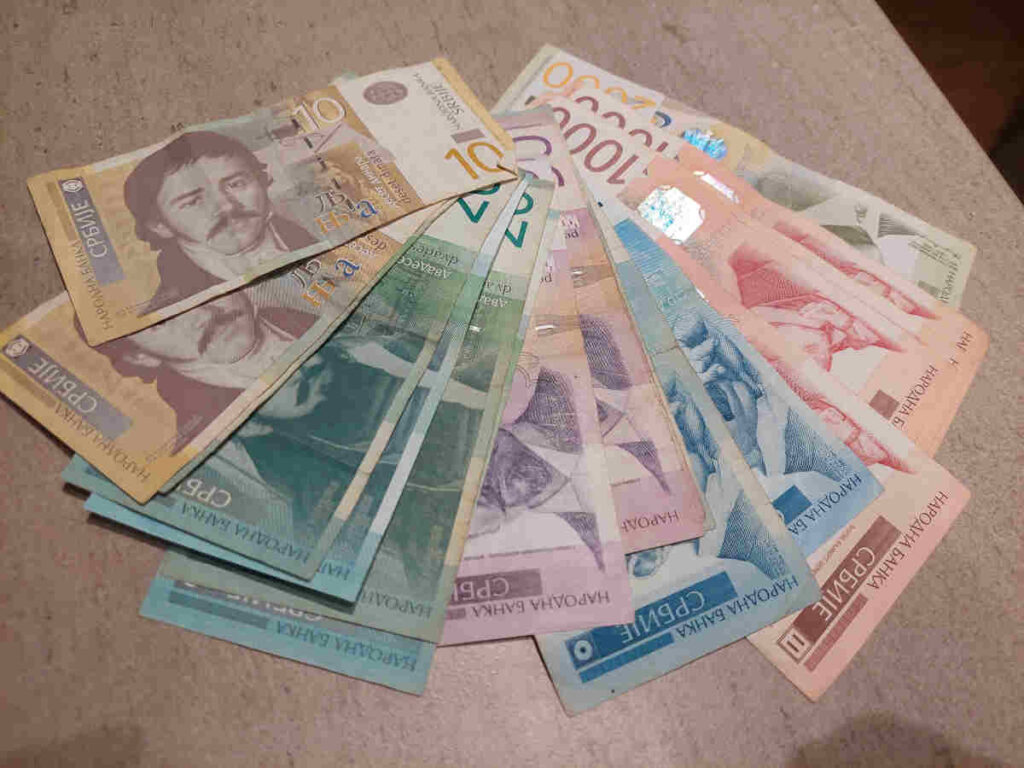
There’s no need to stress about getting dinars before your trip. Belgrade is packed with exchange offices (menjačnica), in all parts of town, but especially in the city center. You’ll also see ATMs everywhere, often every 100–200 meters in busy areas.
The easiest approach is to bring some euros with you. If euros aren’t an option, American dollars, Swiss francs, or other major currencies can also be exchanged in Serbia without issue. You can just as easily use your debit card to withdraw dinars from an ATM once you arrive. International cards are widely accepted, so either method works.
That said, problems with ATMs, though rare, can happen. I recently heard of an expat whose card was eaten by an ATM, and getting it back turned out to be a major hassle, if not impossible. For this reason, the safest approach is to carry enough cash — preferably euros — along with a backup card.
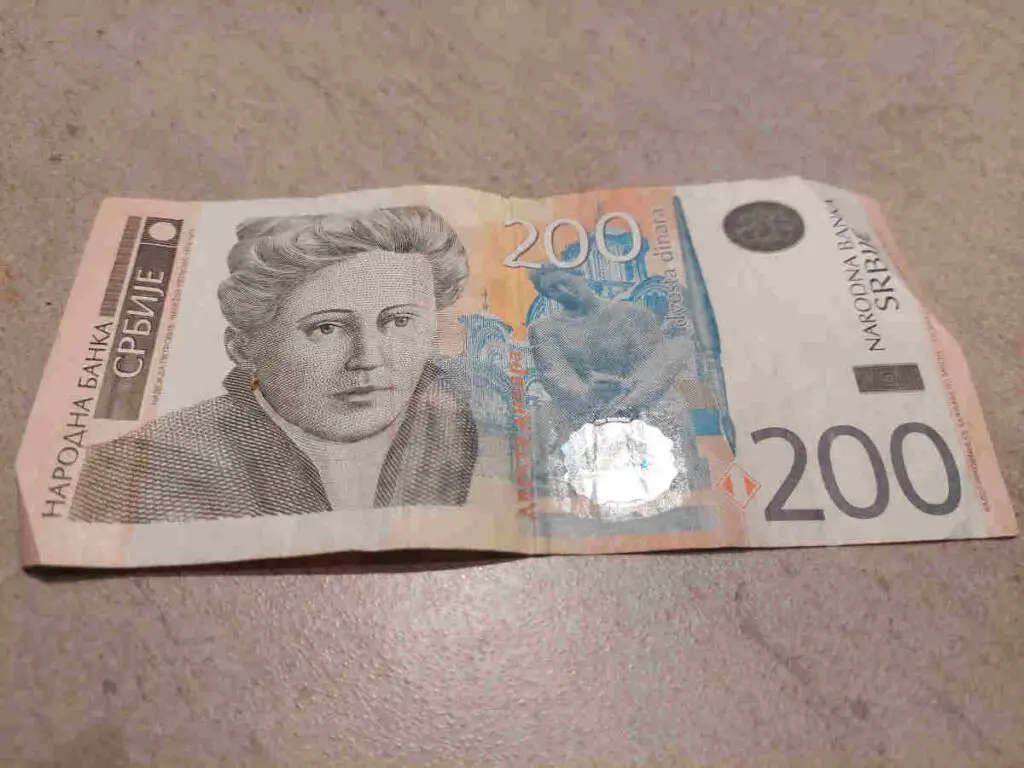
Euros vs. Dollars: What You Should Bring
If you’re planning to bring foreign cash to exchange, euros are a better choice than US dollars. While you can exchange dollars and other major currencies almost everywhere, euros are the most widely accepted and least likely to cause any issues. In fact, many businesses such as restaurants and taxis will accept euros directly, although this is technically not legal.
The RSD/EUR exchange rate has remained very stable for more than a decade. For big-ticket purchases like monthly rent, buying a car, or even property, locals themselves often prefer to deal in euros.
Card Payments
While cash is still very popular, you won’t feel out of place using your card. Visa and Mastercard are accepted in most larger businesses: But don’t expect card payments everywhere. Smaller cafés, local shops, or farmers’ markets will often expect cash only. It’s best to keep some dinars in your wallet at all times.
Final Verdict: Cash or Card? How to Pay in Belgrade
Carry both cash and a card. You’ll almost certainly use both during your stay, and which one you rely on more depends on your habits.
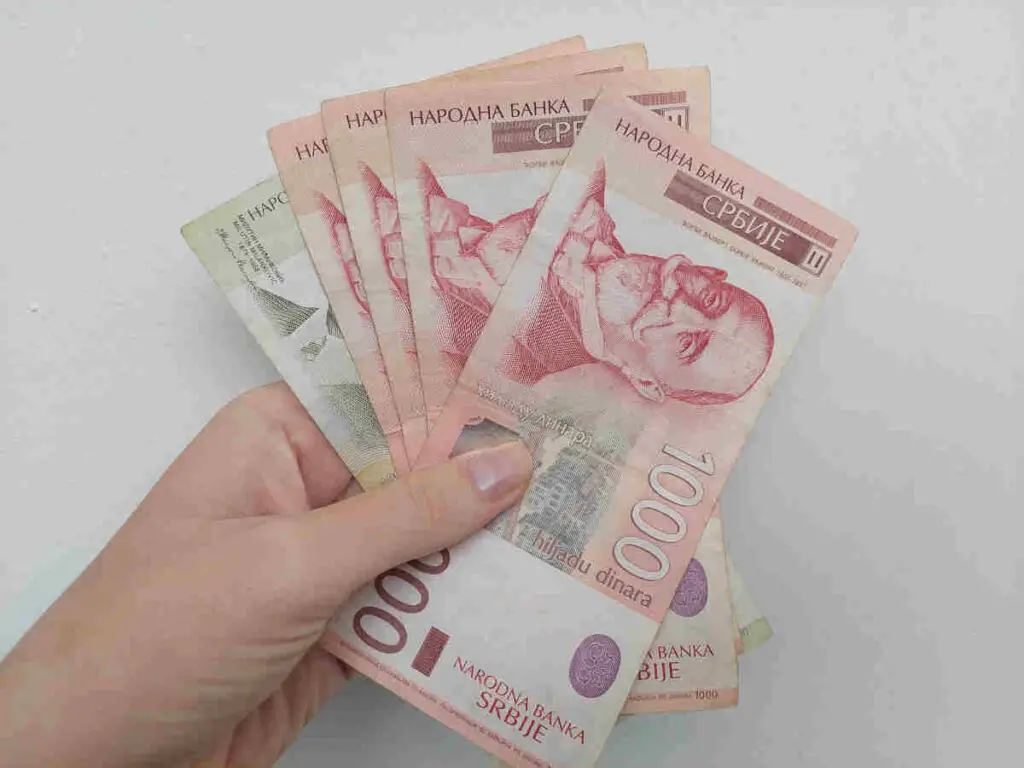
Personally, I prefer cash, so I always carry enough cash and keep my card just as a backup. If you lean more toward card payments, it’s still wise to have about 4,000–5,000 dinars (roughly €35–€45) in your wallet at all times, just in case you come across places that don’t accept cards. Moreover, if you plan to rely mostly on cards, bring two with you for peace of mind.
Belgrade is a city where cash and cards work hand in hand. Cash comes in handy for everyday transactions, while cards cover most modern conveniences such as hotels, chain supermarkets, shopping malls, many restaurants, ride-hailing apps, and even train ticket purchases.
Have you visited Belgrade? Did you find yourself switching between cash and card, or did you rely mostly on one? Share your experience in the comments, as your tips could be really helpful for future travelers!

Leave a Reply