

Belgrade’s Brutalist buildings have revealed their full impact over time, their bold shapes and raw concrete telling the story of a bygone era. Among the standout examples is the so-called Toblerone skyscraper, whose jagged triangular balconies make it one of the city’s most striking architectural marvels. This tower magically radiates beauty through its surface-level grey, gloomy ugliness, much like Belgrade’s other concrete giants from the Yugoslav era.
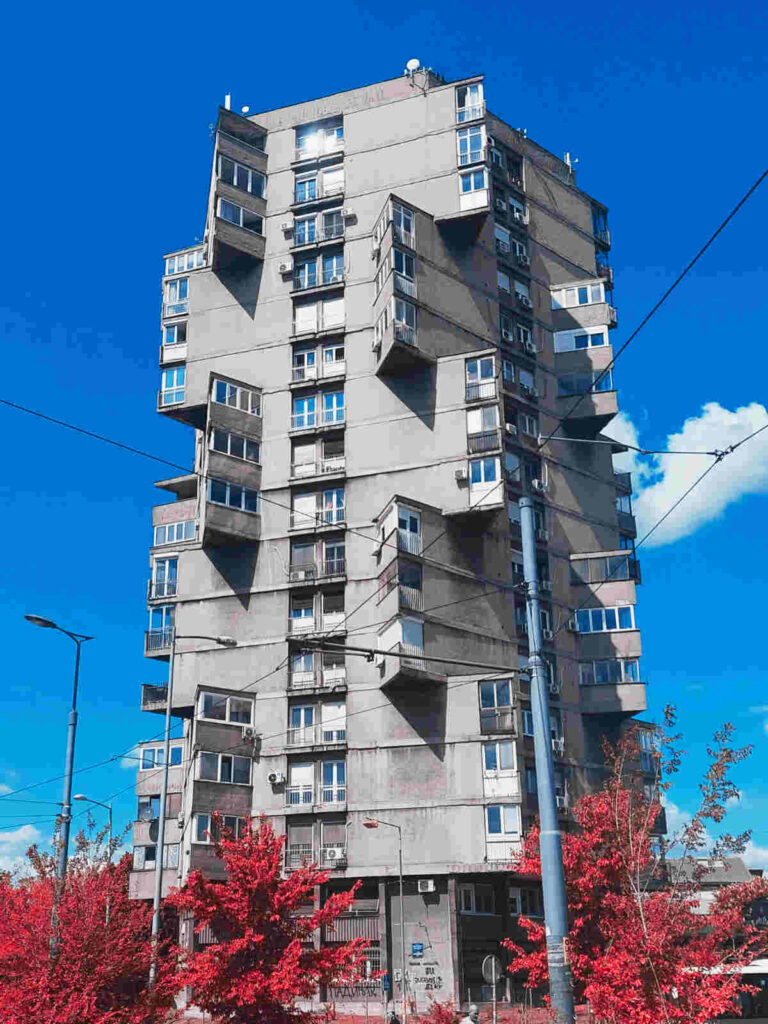
Standing at 9 Mije Kovačevića Street, right next to the Faculty of Orthodox Theology (Bogoslovija), this peculiar high-rise is a masterpiece of Yugoslav Brutalism. Locals call it Toblerone because of its sharp triangular balconies that jut out like pieces of the famous Swiss chocolate bar.
Inside this distinctive jagged silhouette, things get even stranger. The building has a circular layout, and in the middle, two elevators travel vertically through the core, like the heart of some concrete organism.
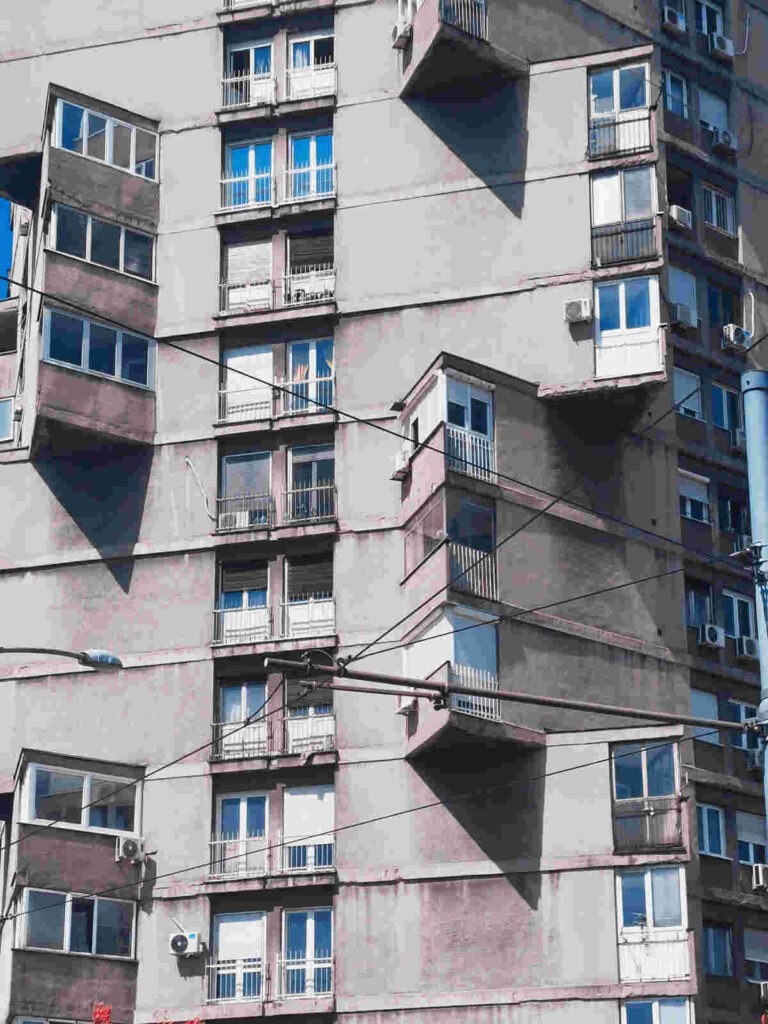
This unusual building was designed by architect Rista Šekerinski and quickly gained recognition, winning an architecture award shortly after its completion in 1963. A historian who grew up in the building once shared a fascinating detail about its technologically advanced residents: by 1969, the tower already had 104 landline telephones, an extraordinary number for the time, which reflected its progress and urban modernity.
The area, locally known as Bogoslovija, is one of Belgrade’s most traffic-congested and polluted junctions. Amid the honking cars and grey skies, the Toblerone building rises as an icon of concrete courage and bold architectural experimentation.
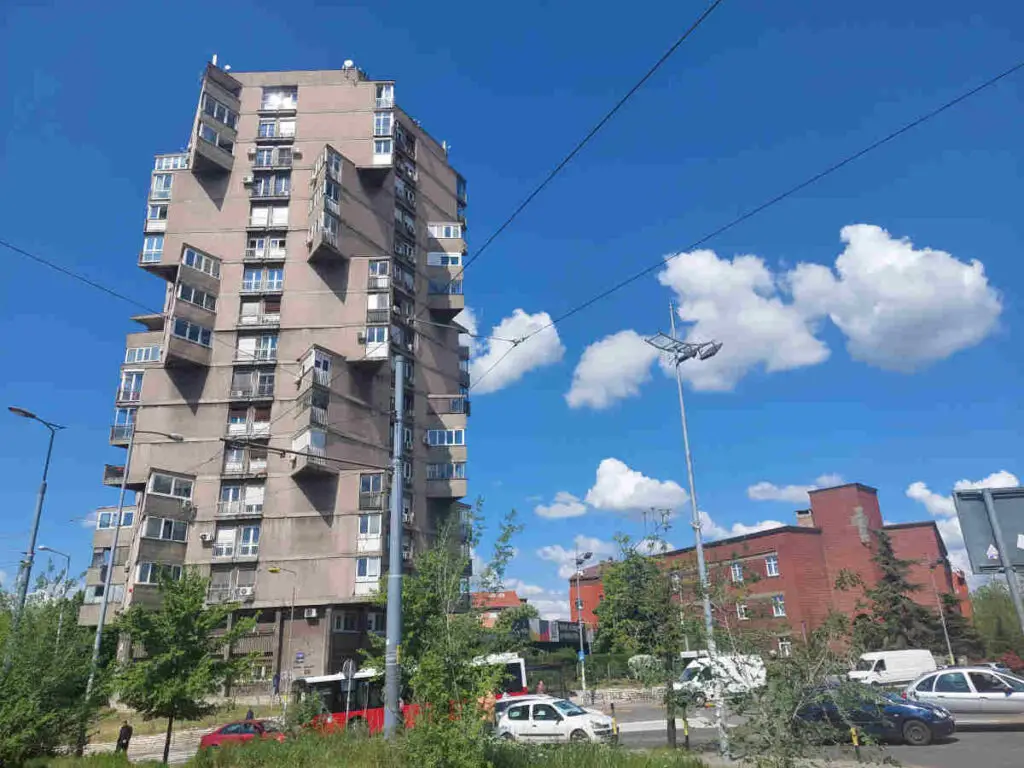
For architecture enthusiasts, photographers, or anyone fascinated by Yugoslavia’s design legacy, the Toblerone skyscraper is a must-see. It embodies the creative ambition of the 1960s and 70s, when architects dared to dream in concrete, pushing the limits of geometry and space in ways that continue to surprise and inspire today.

Leave a Reply