
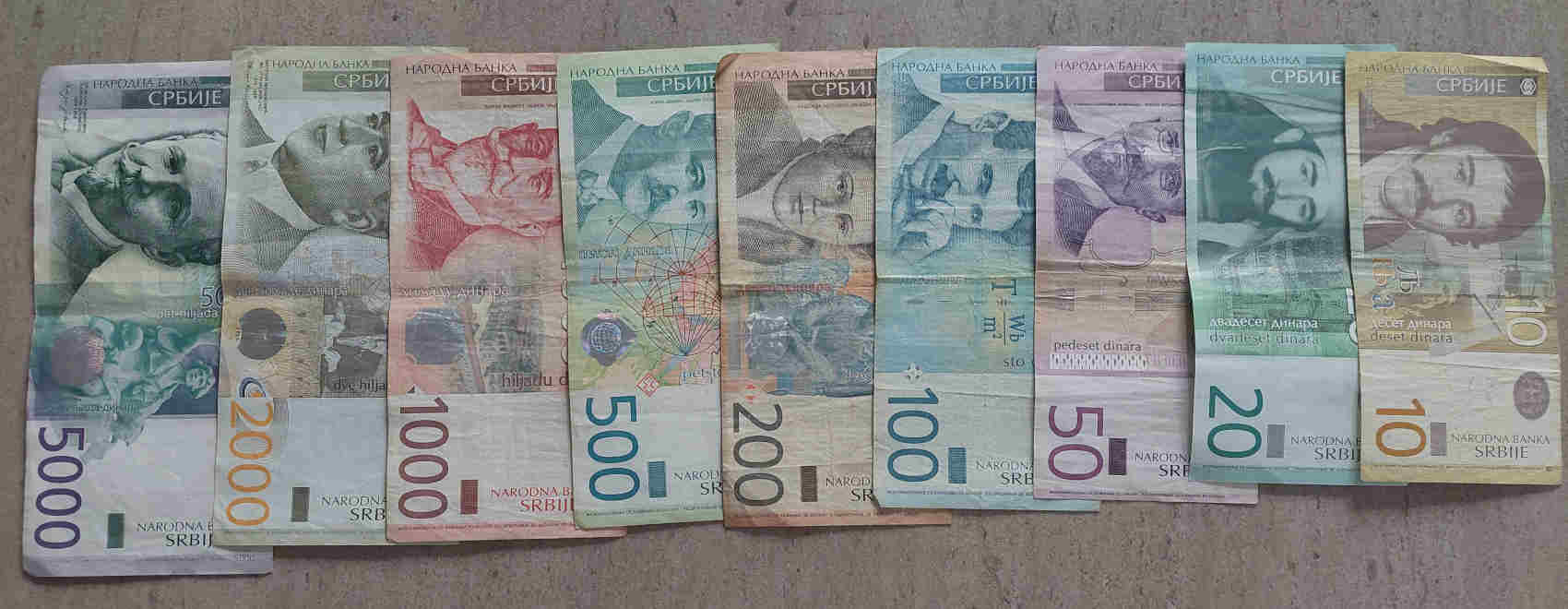
Serbia uses the Serbian dinar (RSD), and its colorful banknotes and coins feature some of the country’s most important cultural and historical figures. In this guide, you’ll see all Serbian money notes and coins, learn about the people and landmarks printed on them, and get practical advice on exchanging currency, using ATMs, and whether it’s better to rely on cash or cards in Belgrade.
Table of Contents
Serbian Banknotes
Serbia currently has nine banknotes in circulation: 10, 20, 50, 100, 200, 500, 1000, 2000, and 5000 dinars. The National Bank of Serbia designs each note with famous personalities and heritage symbols.
10 dinars
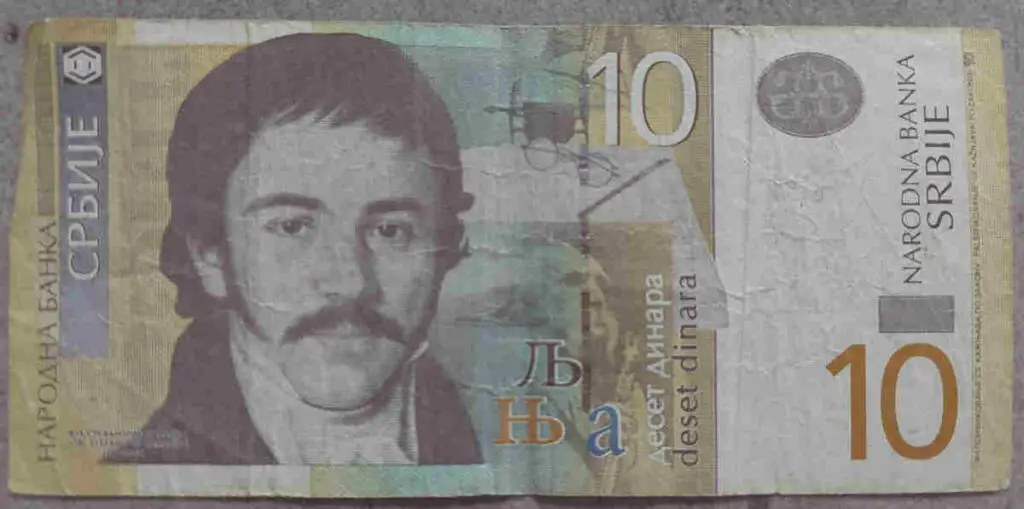
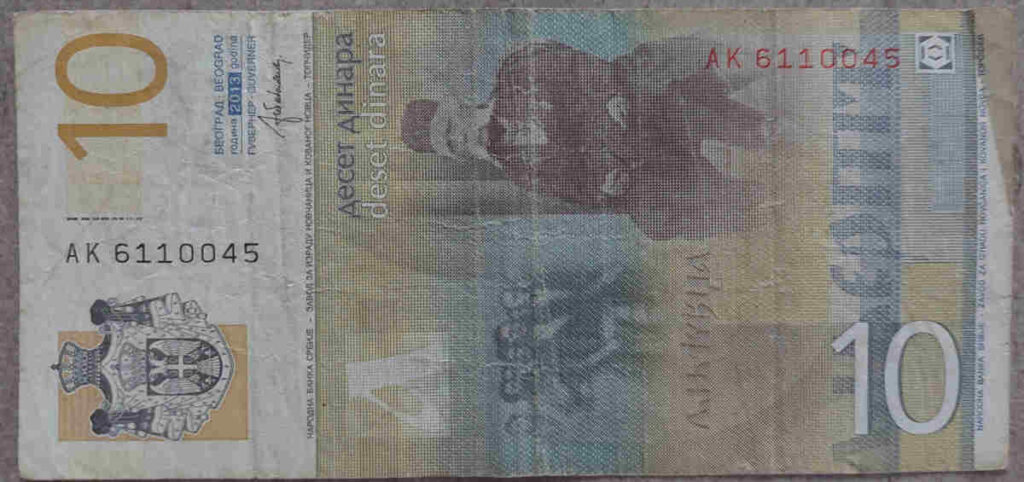
- Dedicated to: Vuk Karadžić (1787–1864) – reformer of the Serbian language.
- Motifs: Karadžić’s writing kit, an open book, Serbian alphabet letters, participants of the First Slavic Congress in Prague (1848), coat of arms of the Republic of Serbia.
- Color: Ochre.
20 dinars
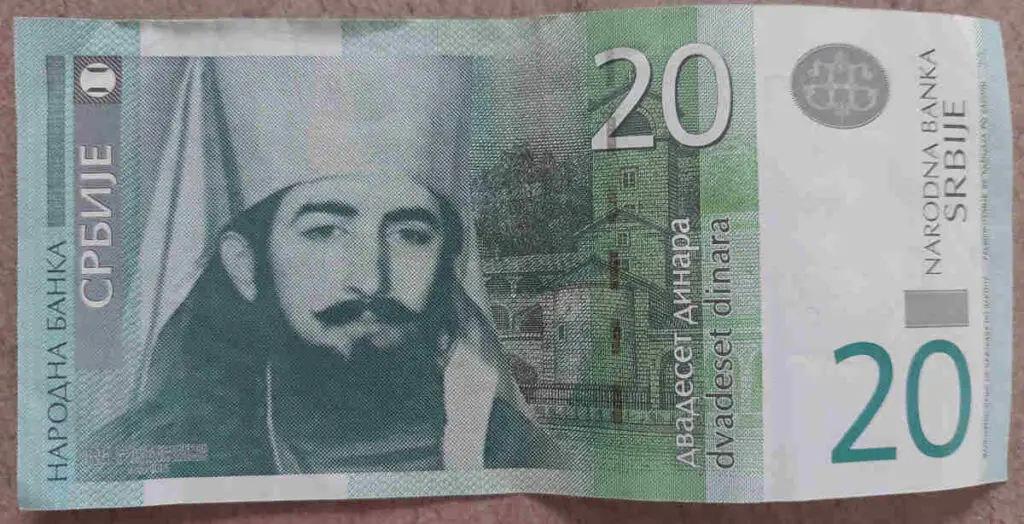
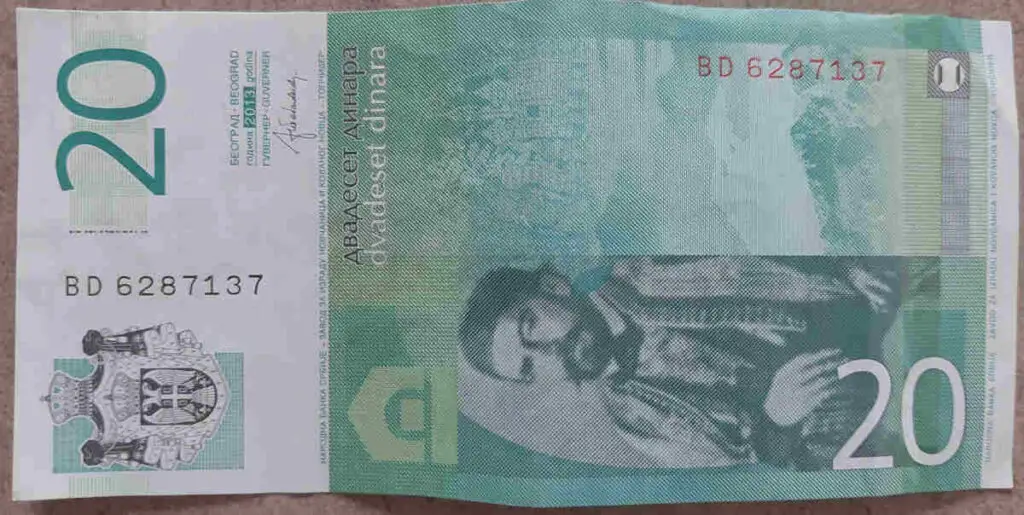
- Dedicated to: Petar II Petrović Njegoš (1813–1851) – poet, philosopher, and bishop.
- Motifs: Cetinje Monastery, detail from the decorative miniature featured on the first Slavic Octoechos (1494), Komovi mountains, coat of arms.
- Color: Green.
50 dinars
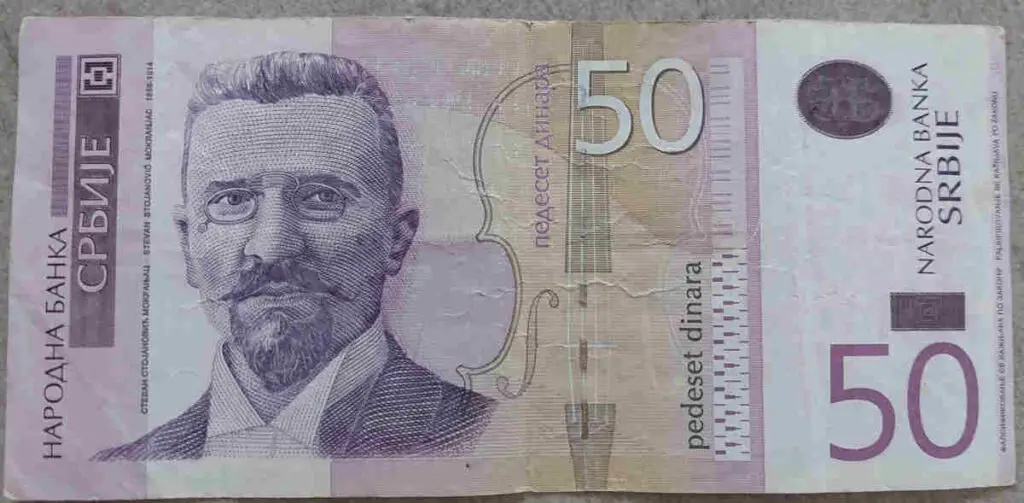
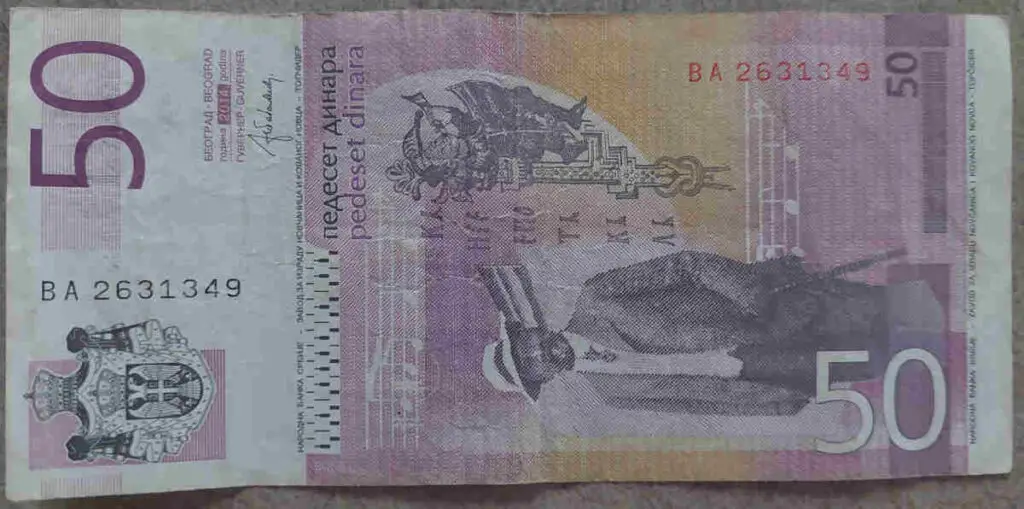
- Dedicated to: Stevan Stojanović Mokranjac (1856–1914) – famous Serbian composer.
- Motifs: Violin, keyboard, music scores, Miroslav Gospel illumination, coat of arms.
- Color: Purple.
100 dinars
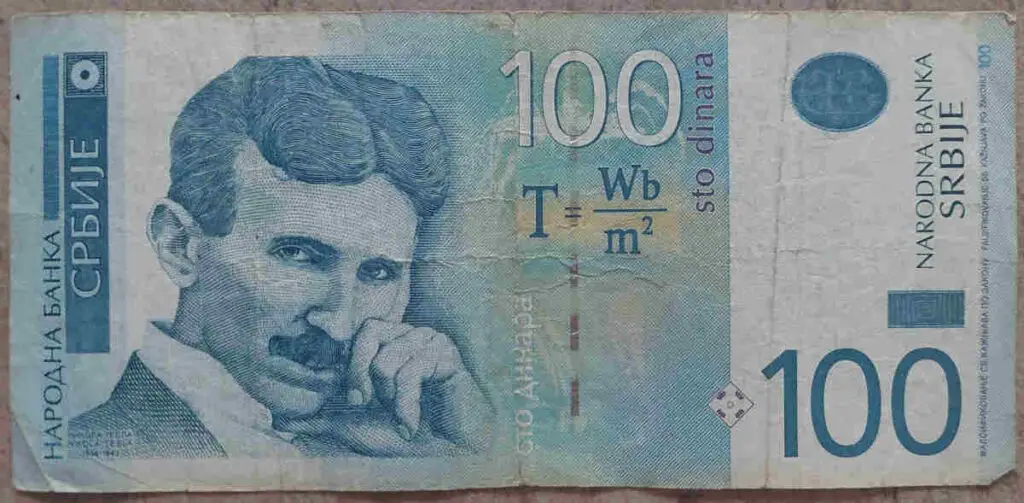
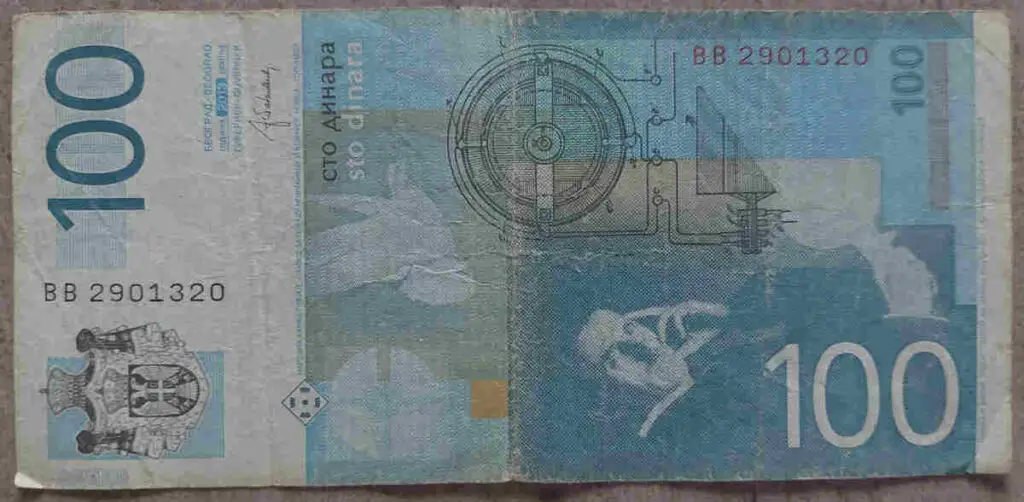
- Dedicated to: Nikola Tesla (1856–1943) – world-renowned inventor and scientist.
- Motifs: Mathematical formulas, electric discharge, Tesla’s plant, sketch of induction engine, “Tesla’s dove,” coat of arms.
- Color: Blue.
200 dinars
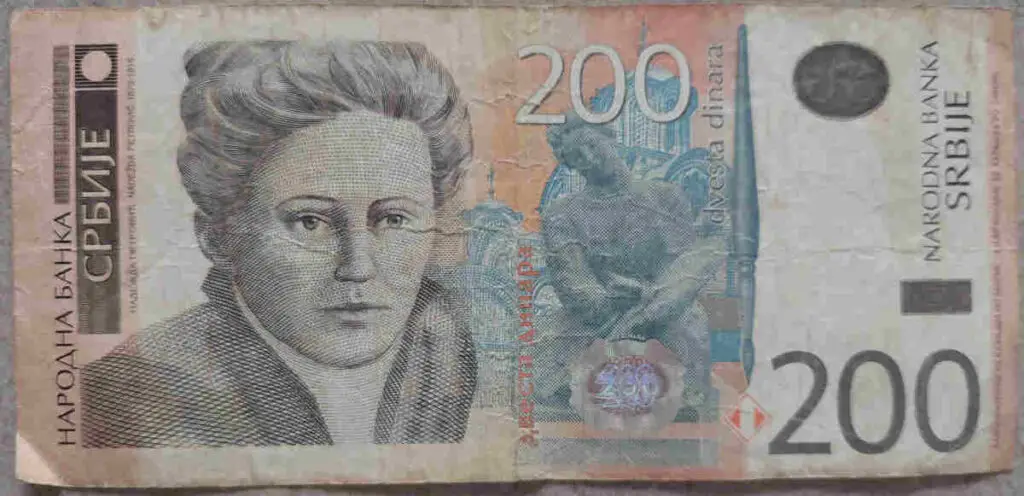
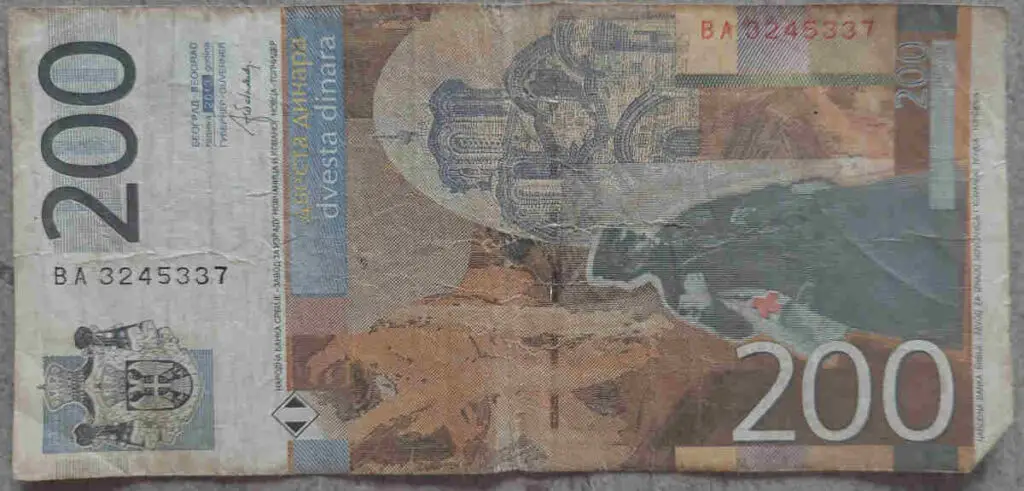
- Dedicated to: Nadežda Petrović (1873–1915) – Serbian painter and one of the women war photography pioneers in the region.
- Motifs: Gračanica Monastery, painter’s brush, Petrović as a volunteer nurse in the First Balkan War, detail from her painting, coat of arms.
- Color: Brown.
500 dinars
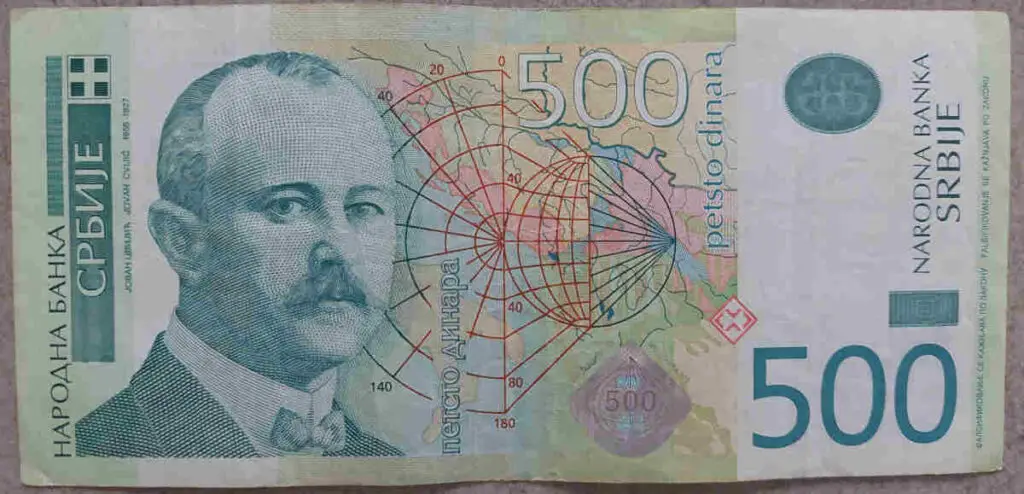
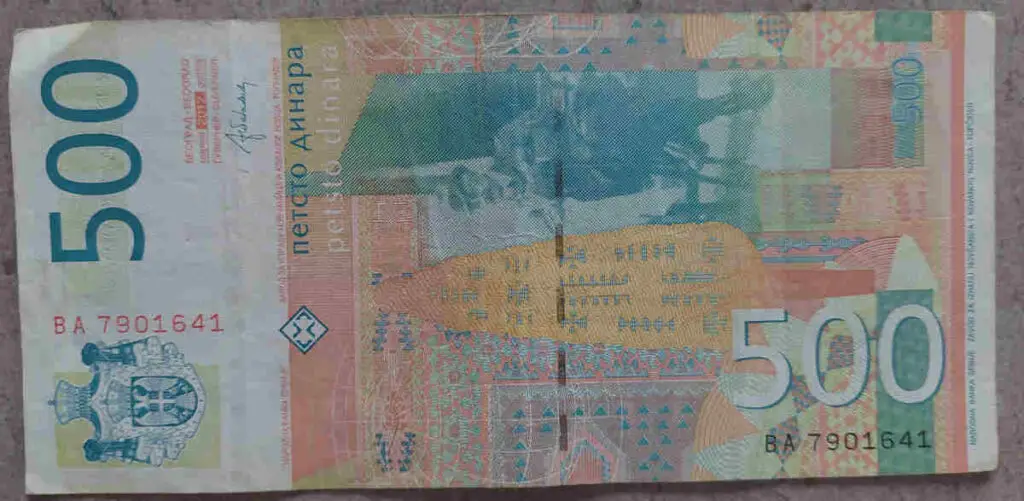
- Dedicated to: Jovan Cvijić (1865–1927) – geographer and ethnologist.
- Motifs: Stylized ethnographic motifs, coat of arms.
- Color: Predominantly green, with multicolor accents.
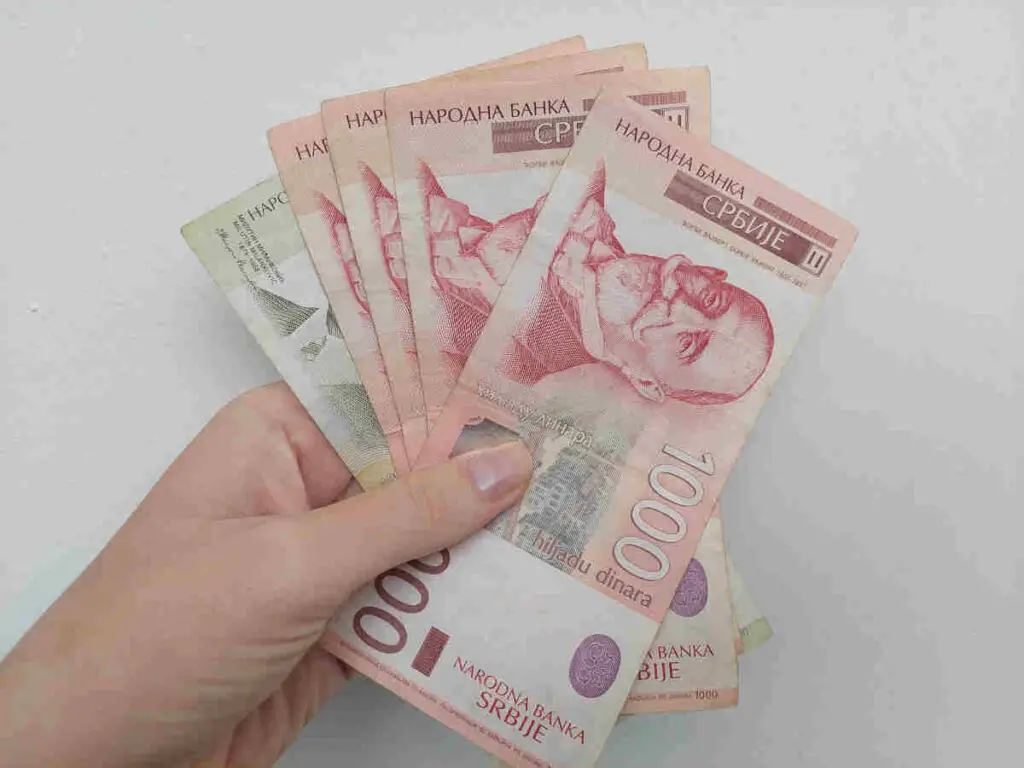
1000 dinars
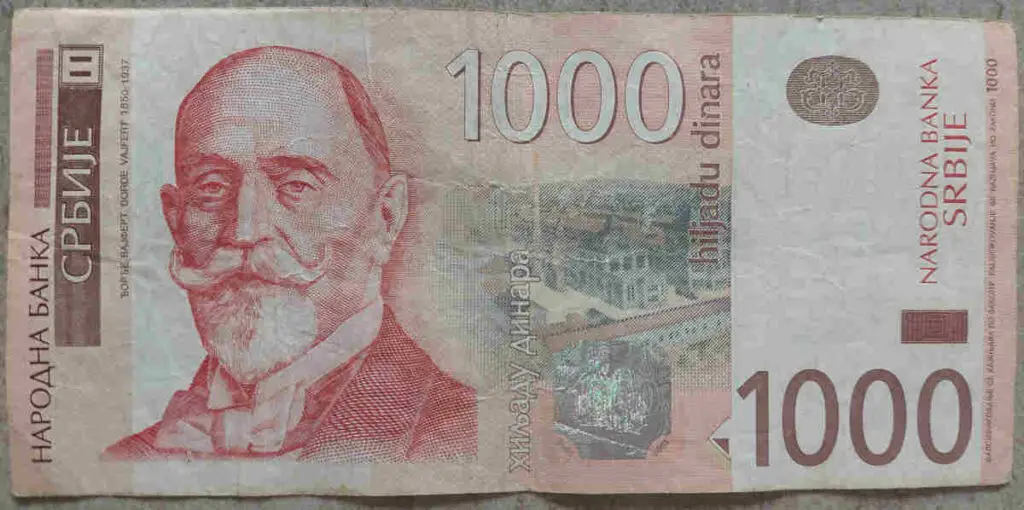
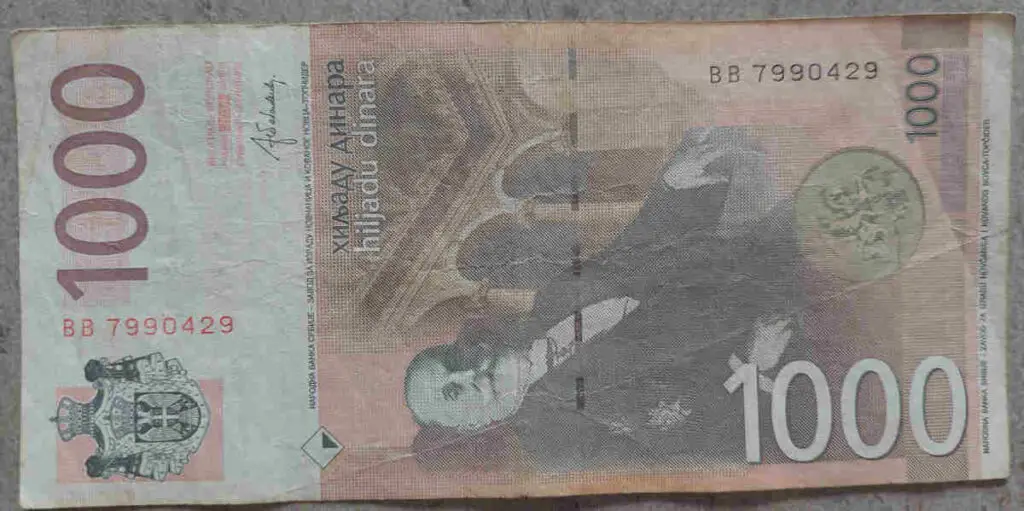
- Dedicated to: Djordje Vajfert (1850–1937) – industrialist, Governor of the National Bank.
- Motifs: Outline of Vajfert’s brewery, hologram of St. George and the dragon, National Bank interior, medal, coat of arms.
- Color: Red.
2000 dinars
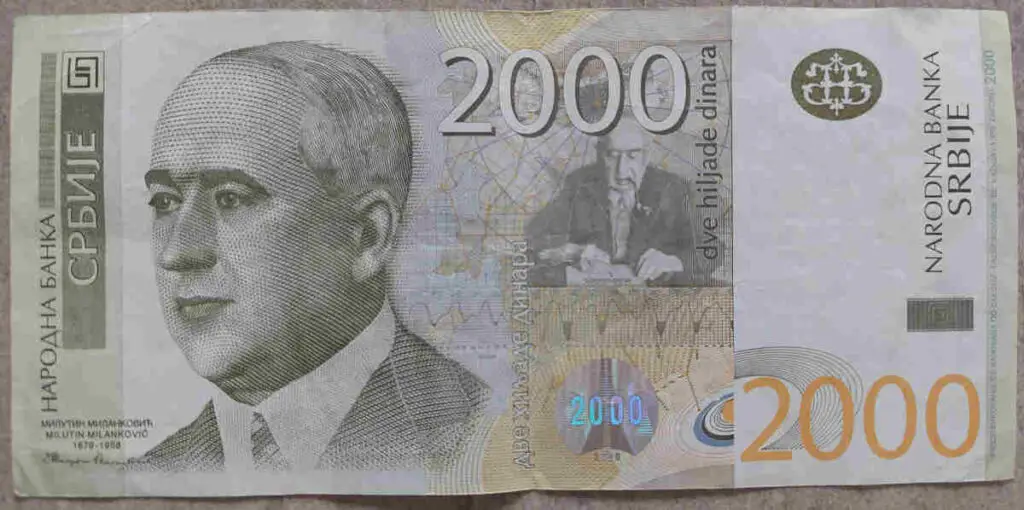
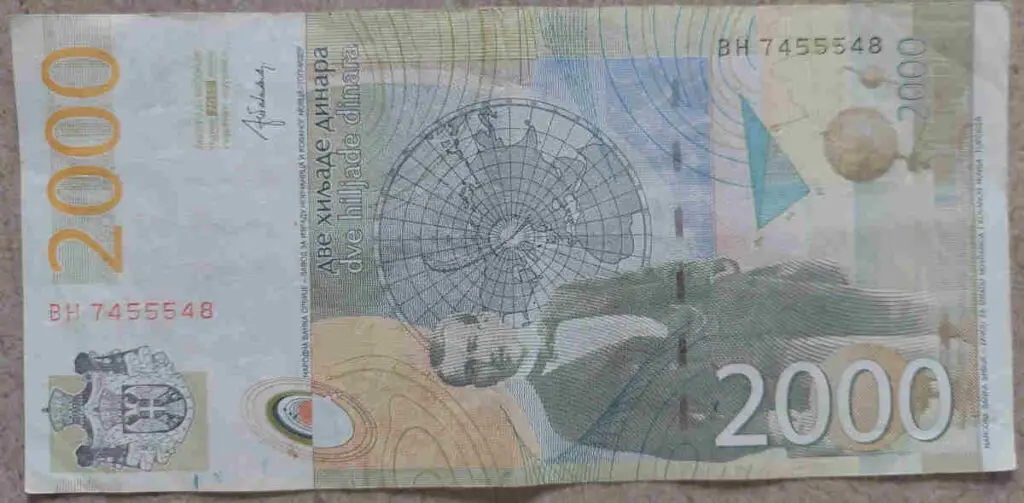
- Dedicated to: Milutin Milanković (1879–1958) – scientist and climatologist.
- Motifs: Glaciation cycle calculations, stylized sun disk, “Path of the North Celestial Pole,” coat of arms.
- Color: Grey-olive.
5000 dinars
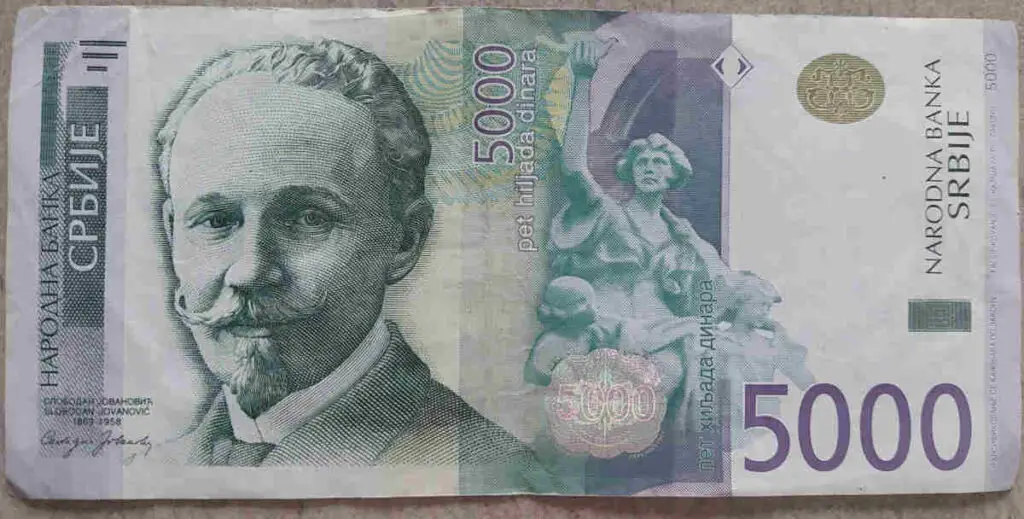
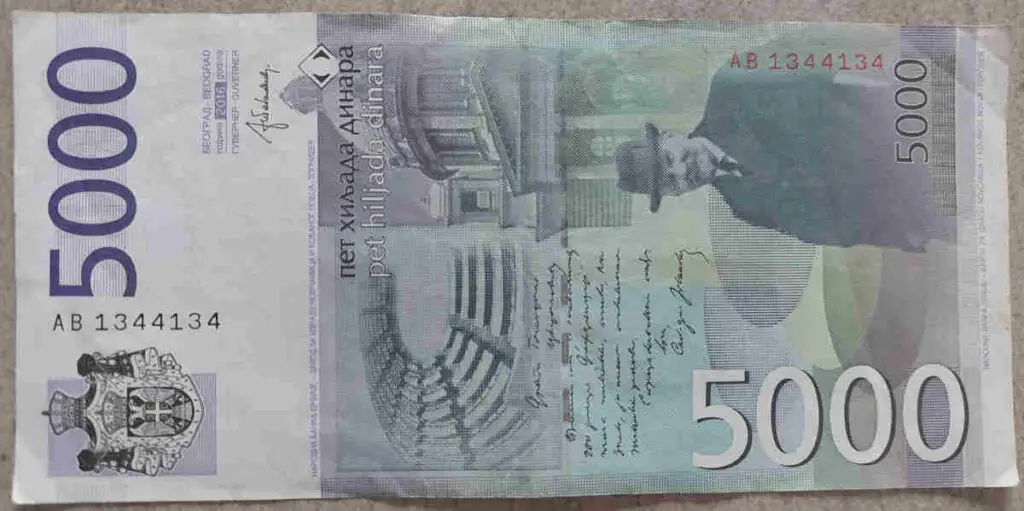
- Dedicated to: Slobodan Jovanović (1869–1958) – writer, historian, lawyer, philosopher, literary critic, diplomat, politician, and one of the most prominent intellectuals of his time.
- Motifs: Federal Parliament silhouette, interior detail of Parliament building, coat of arms.
- Color: Purple and green.
This is highest-value note, not commonly used in daily transactions.
Serbian Coins
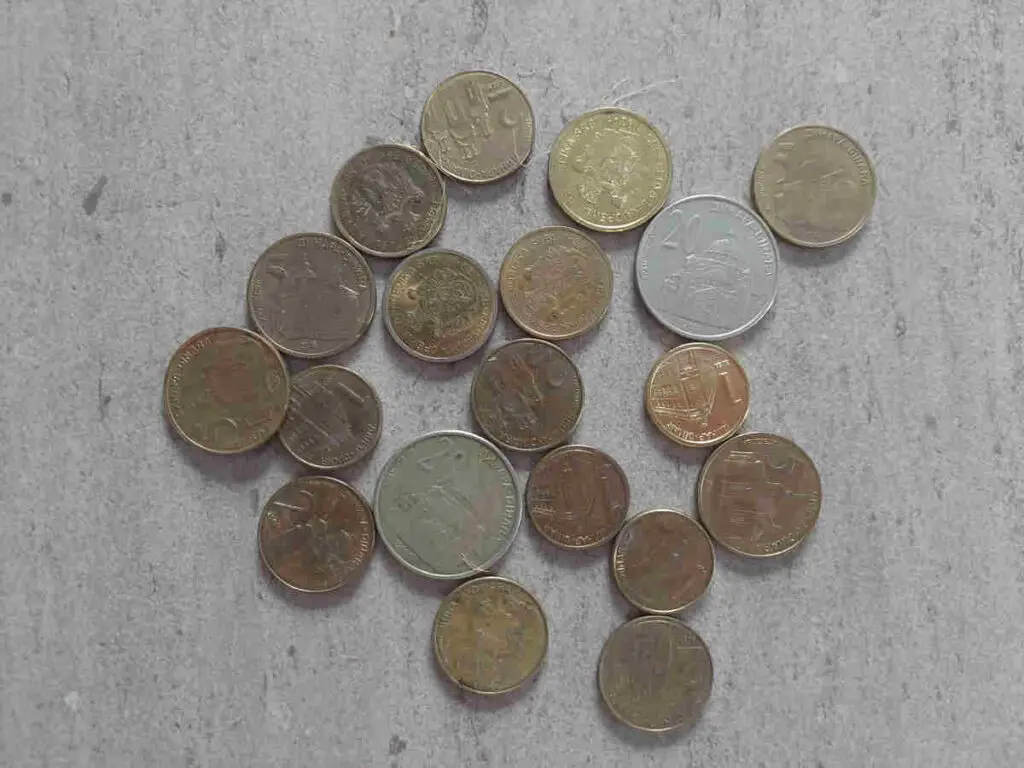
Coins are still used in Serbia, though due to inflation, you may sometimes not receive very small change, such as one or even five dinars. Currently, the coins in circulation are:
- 1 dinar
- 2 dinars
- 5 dinars
- 10 dinars
- 20 dinars
FAQs About Serbian Currency
Does Serbia use the euro?
No. Serbia is not in the Eurozone, so the official currency is the Serbian dinar (RSD). Some hotels, tourist agencies, or landlords might quote prices in euros, but everyday payments must be made in dinars.
What currency is best to take to Serbia?
Euros are the most convenient currency to bring for exchange in Serbia, as they are accepted everywhere and usually offer the best rates. However, other major currencies such as US dollars, British pounds, Swiss francs, and others can also be exchanged without difficulty.
Is it better to use cash or card in Belgrade?
As we explained in our post How Popular is Cash in Belgrade, the most practical approach is to carry both cash and a card. While cards are widely accepted, cash can still be essential for small businesses, open-air markets, taxis, and similar situations.

Leave a Reply